17 Oct 1919
King Alfonso XIII inaugurates the Metro
Alfonso XIII opens Line 1 between Puerta del Sol and Cuatro Caminos, 3.48 km with eight stations, built by the Compañía Metropolitano Alfonso XIII.
An interactive history of Metro de Madrid: a century of tunnels, stations and riders you can scrub through, on a 3D city, with today's trains running live.
Built by Blacknosaur, sponsored by WITAM.
736,874,012 trips in 2025. Hardly anyone on board knows how the network got here
The history is real and well kept, just scattered: company ledgers from 1919, Royal Decrees, transparency spreadsheets, press releases, Wikipedia tables. You could read about a century of the Metro. You couldn't watch it grow.
So we built one place to watch it: free, public, sponsored by WITAM, about the thing everyone in Madrid uses and nobody sees whole.
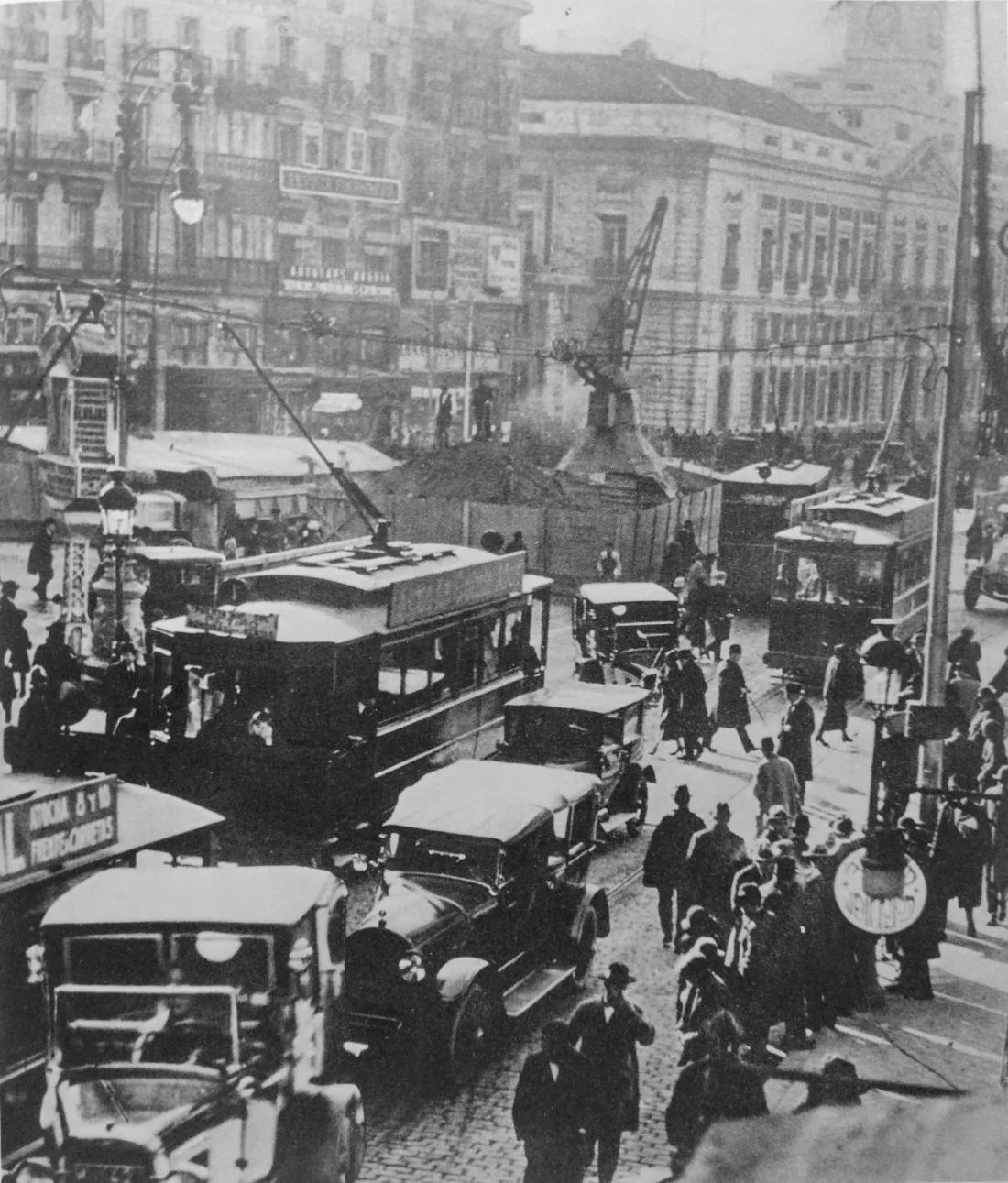
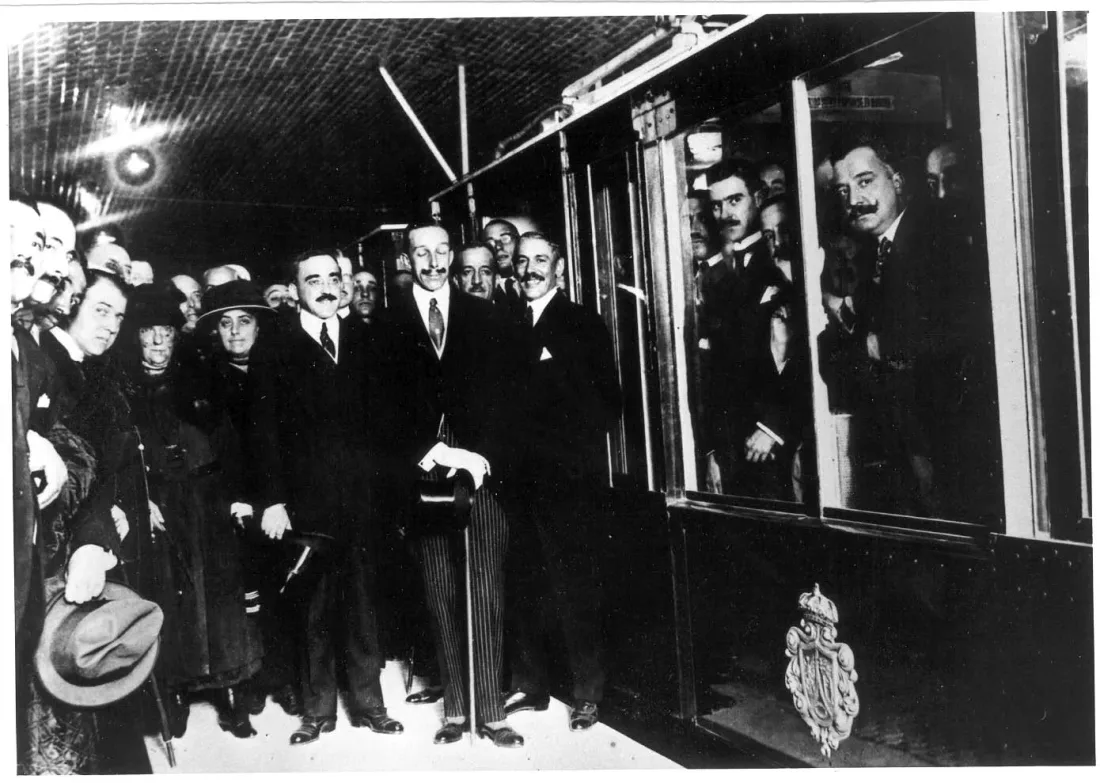
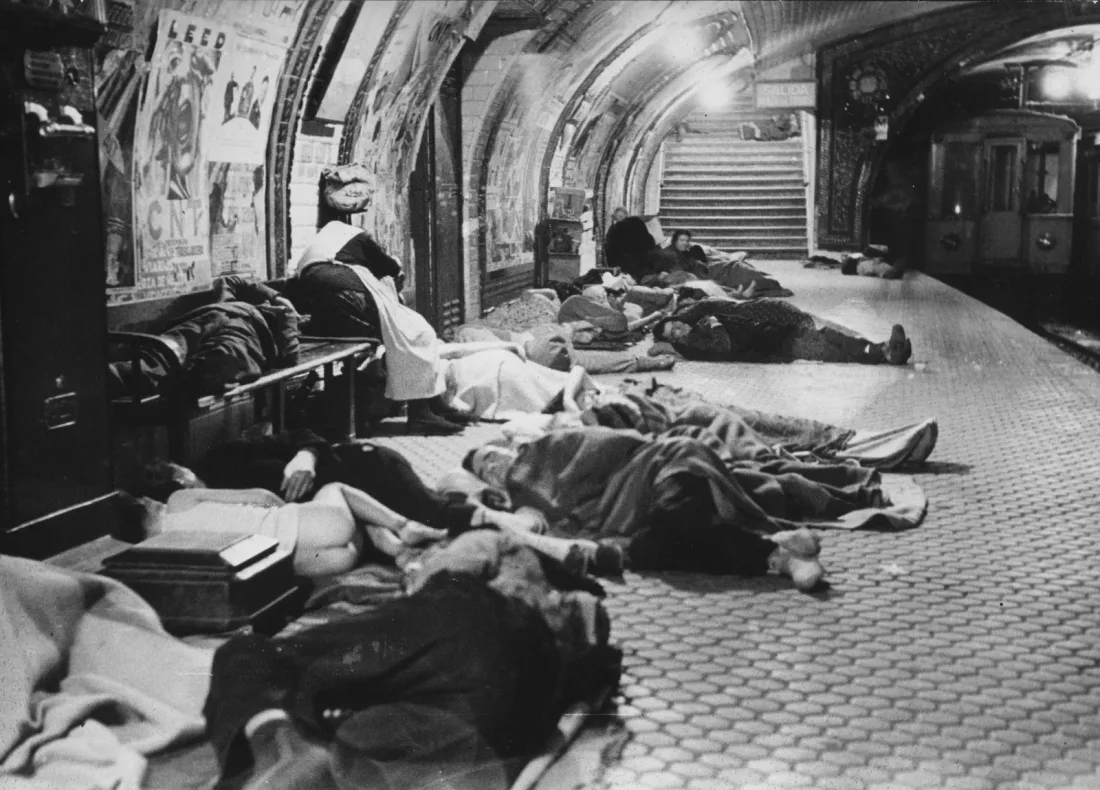
Rebuild the network for any day since 1919 and let people scrub through it. This is the real data: each section draws in on its opening date.
1919
17 Oct 1919
Alfonso XIII opens Line 1 between Puerta del Sol and Cuatro Caminos, 3.48 km with eight stations, built by the Compañía Metropolitano Alfonso XIII.
We started in the archives, not the editor: company records from 1919, decrees in the BOE, the transparency portal's station entries, press releases. Every figure on screen links to where it came from.
Each stretch of track was traced from OpenStreetMap and given its opening day, so the network can be rebuilt for any date since 1919. Platforms carry their depth below the street.
Three.js draws Madrid's buildings and runs the lines underneath as tubes, in the browser, on a laptop or a phone.
Metro publishes arrival times, not positions. A Cloudflare Worker batches the platform feeds, caches them for 30 seconds and infers where each train is. A timetable model fills the gaps, and the map says which is which.
A poster and video maker runs on the visitor's device: eight styles, Story, Post or Square, with the caption ready to paste.
A site in five views, from the archive to the train you can ride along with right now.
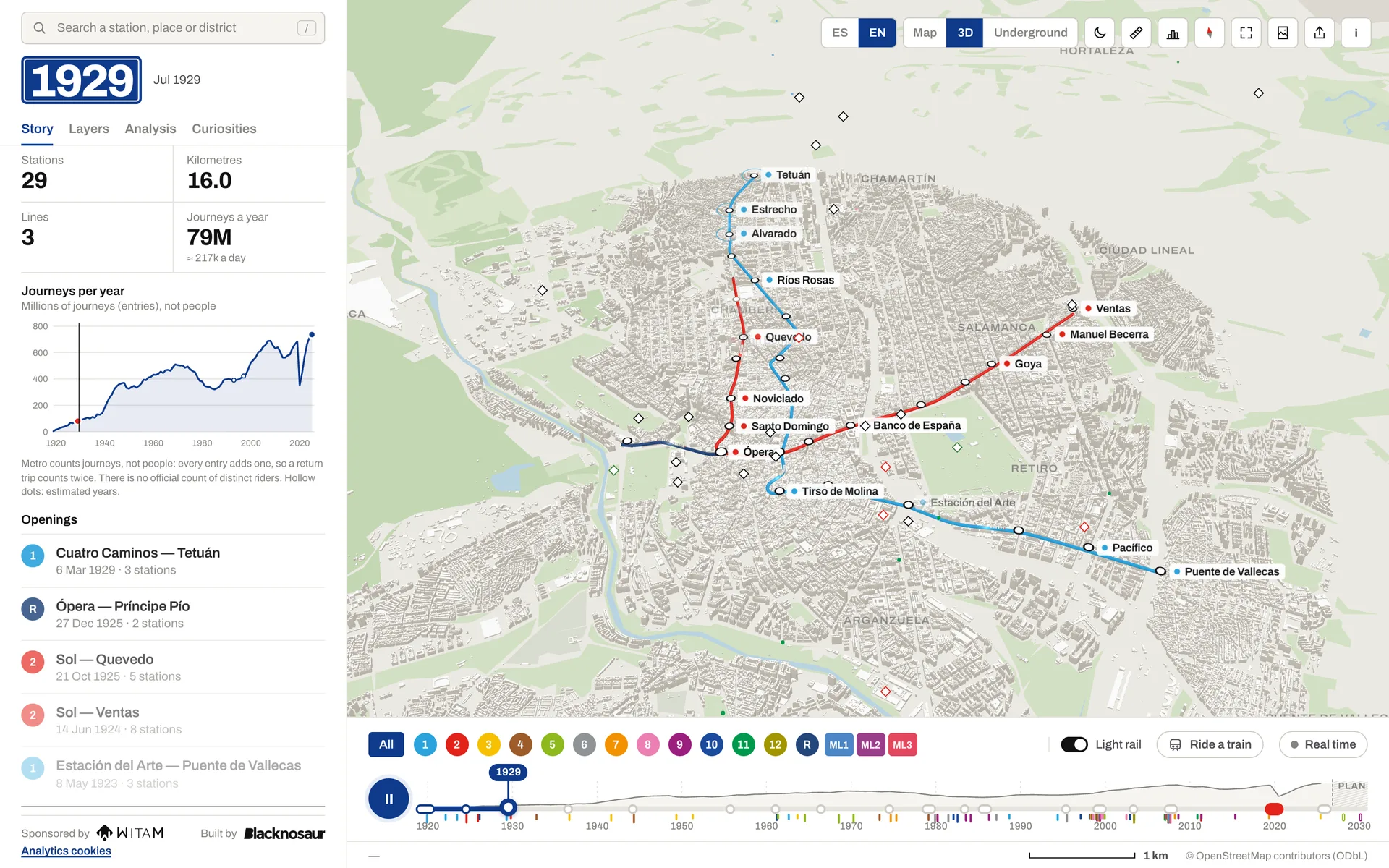
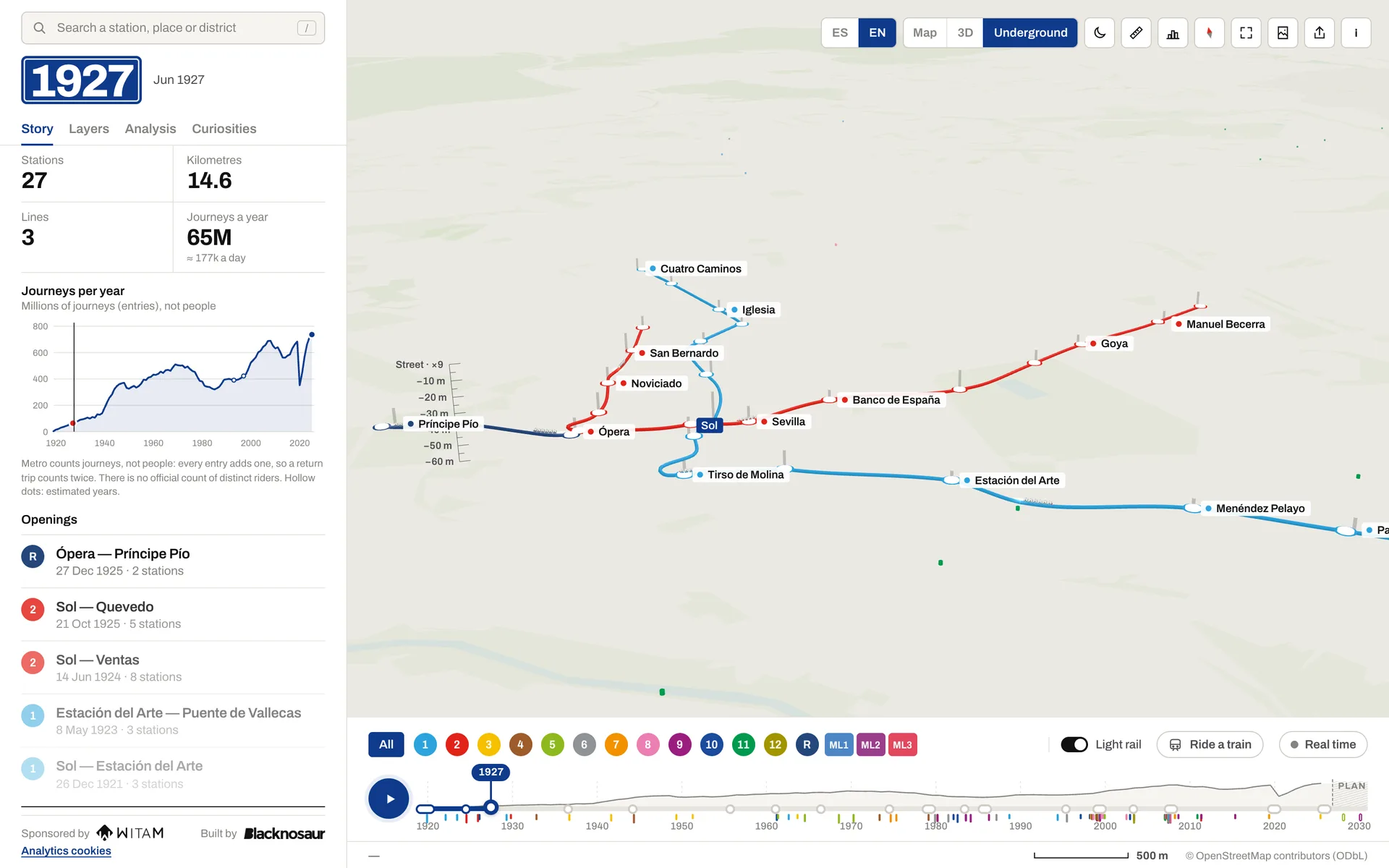
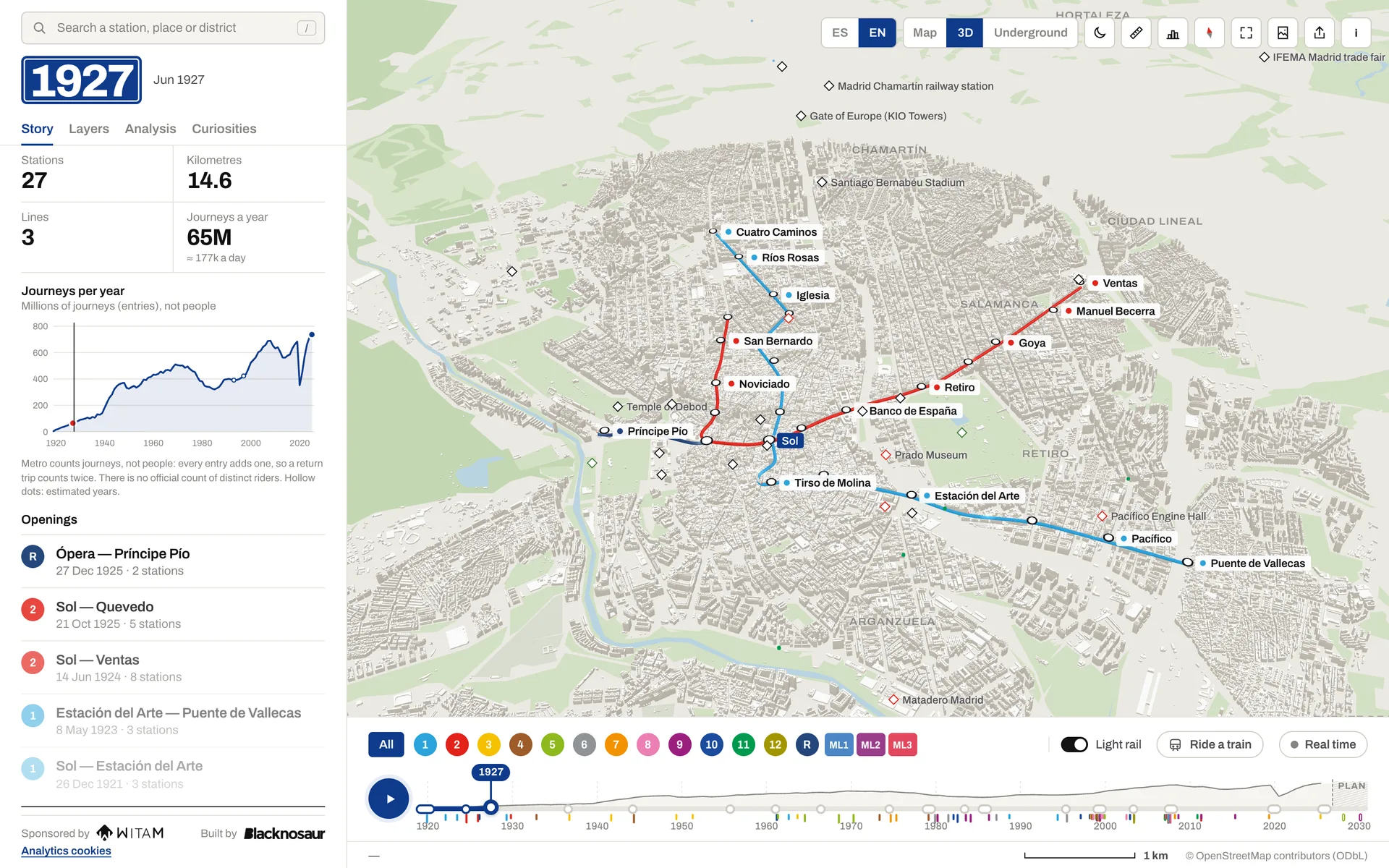
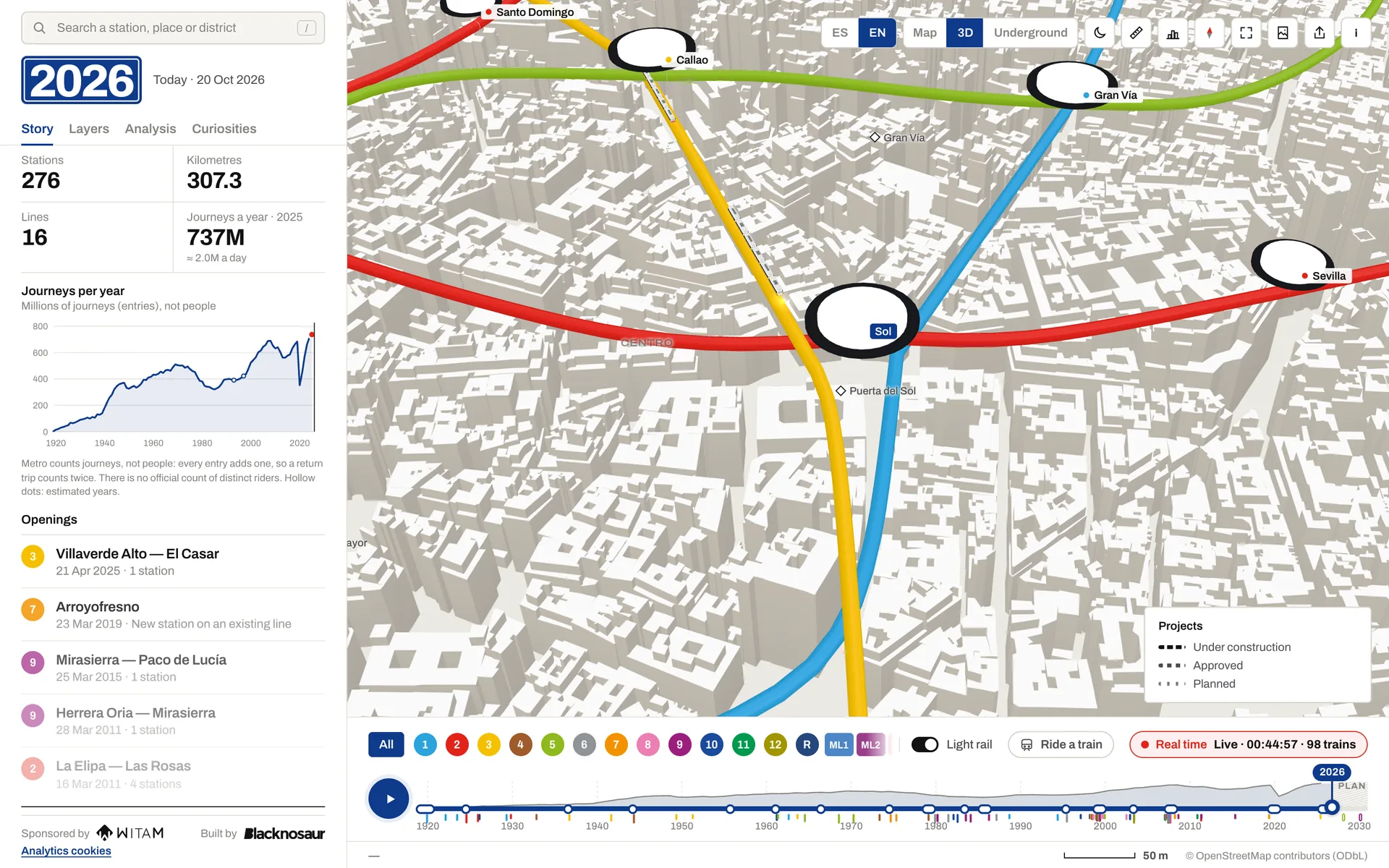
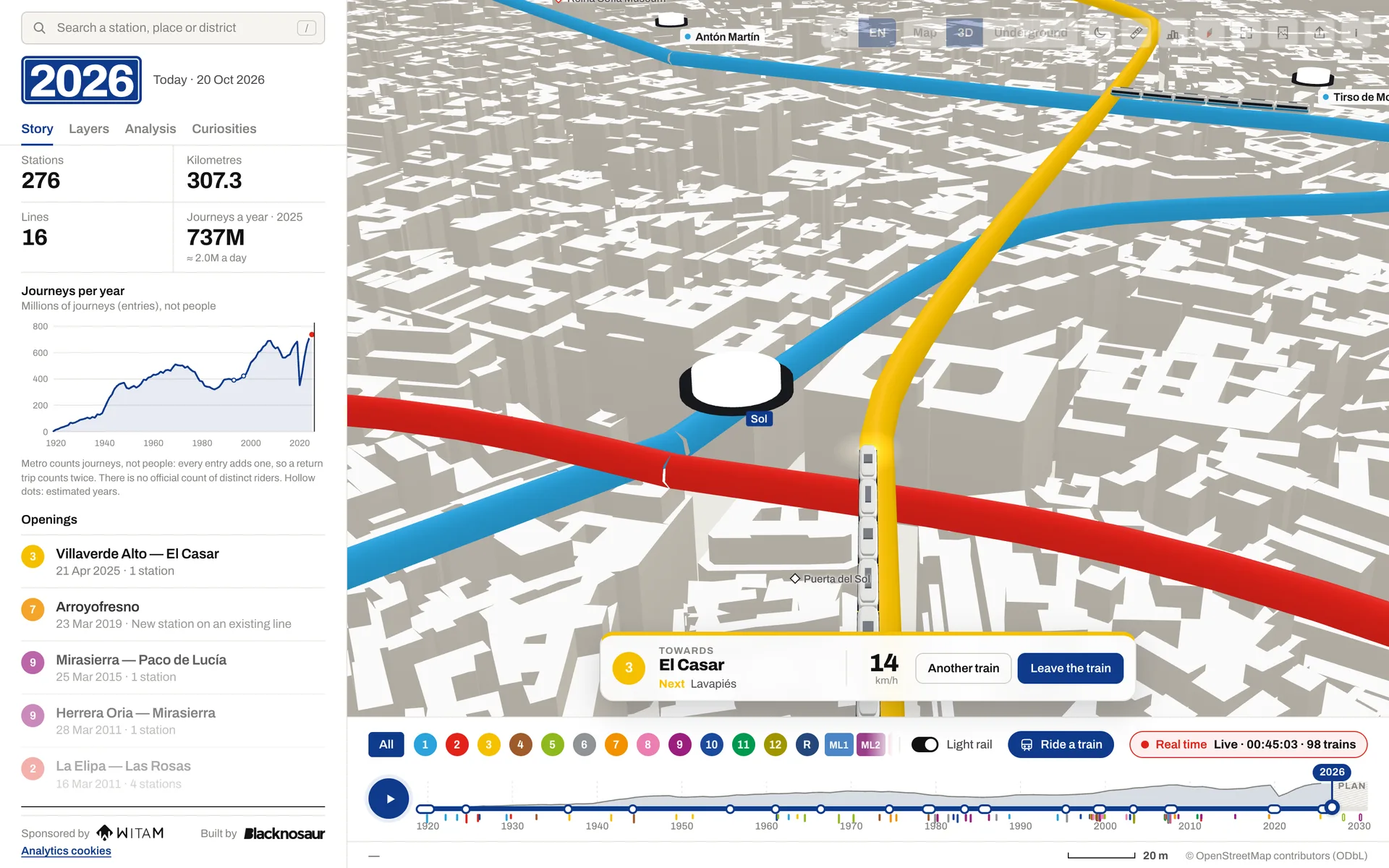
Scrub from 1917 to today. Every opening is dated, every number links to its source, with journeys per year alongside
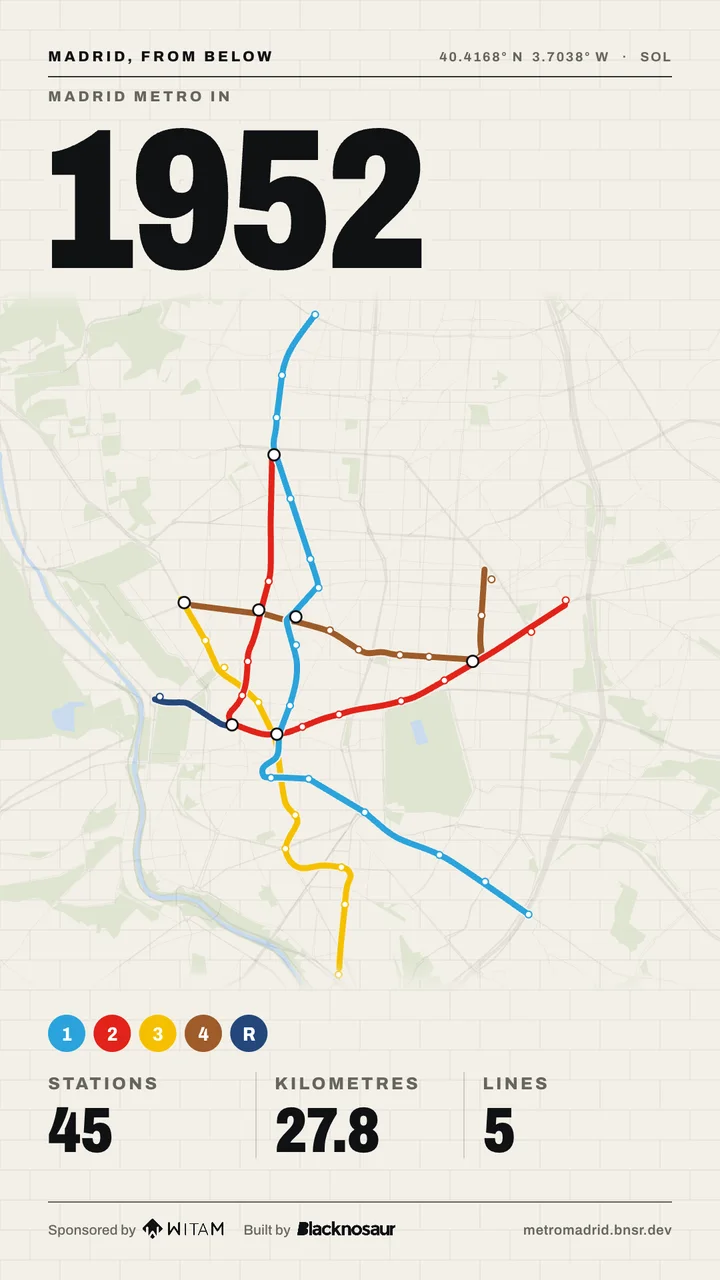 Platform
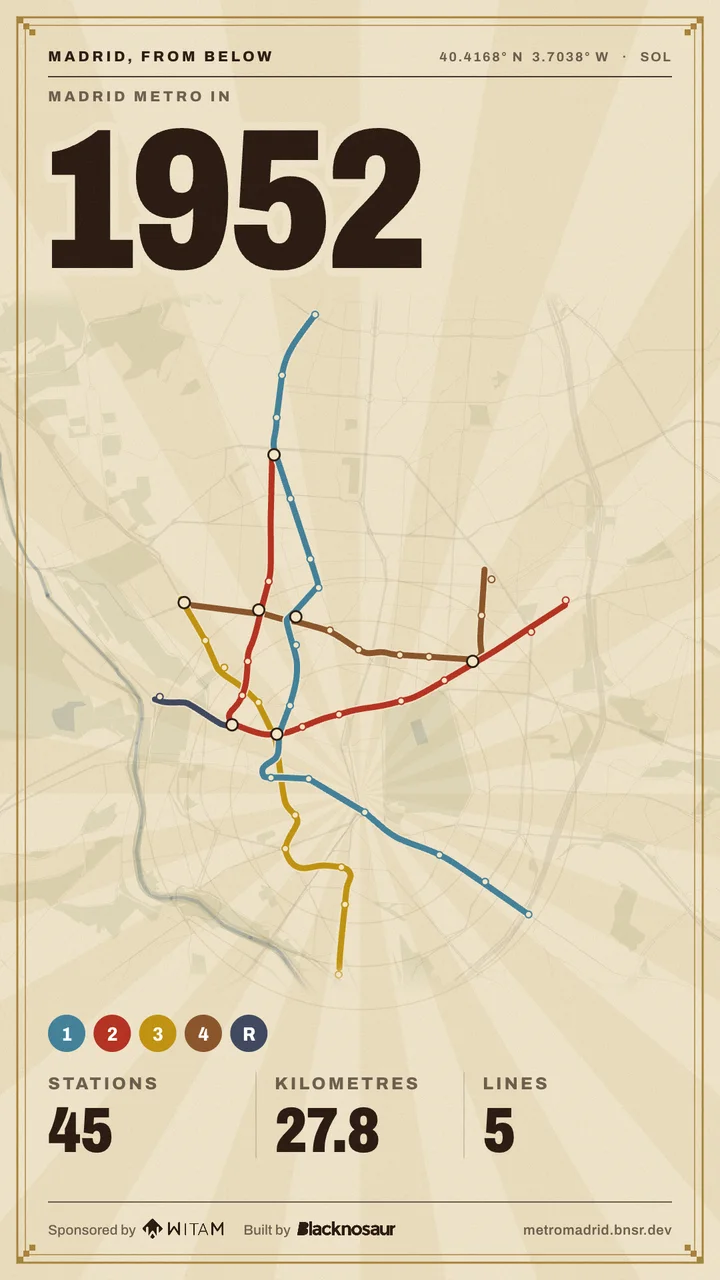 Deco 1919
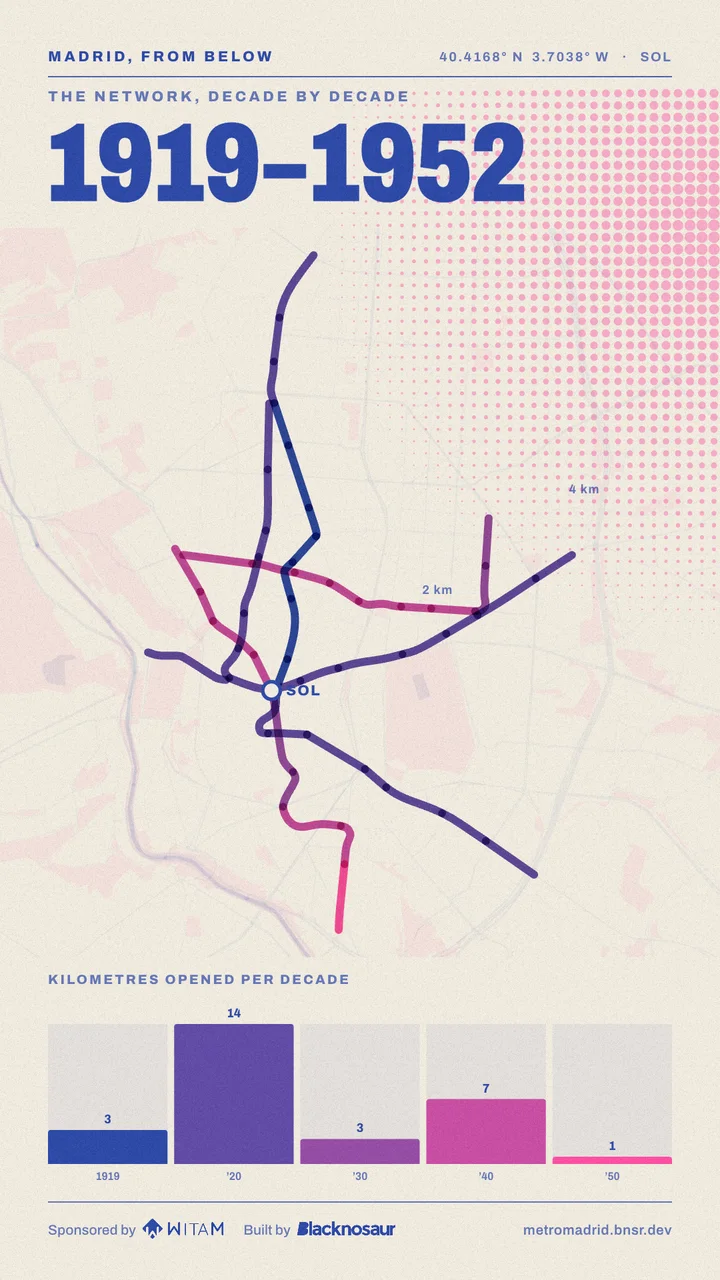 Riso
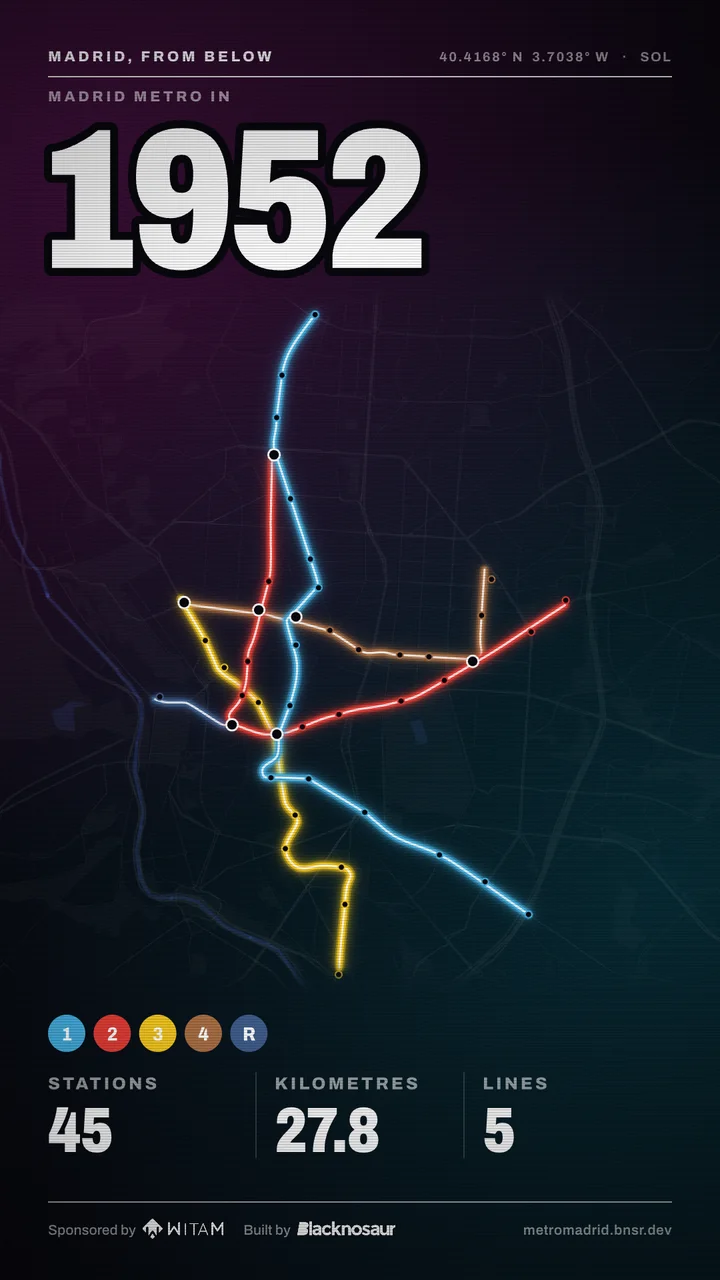 Neon
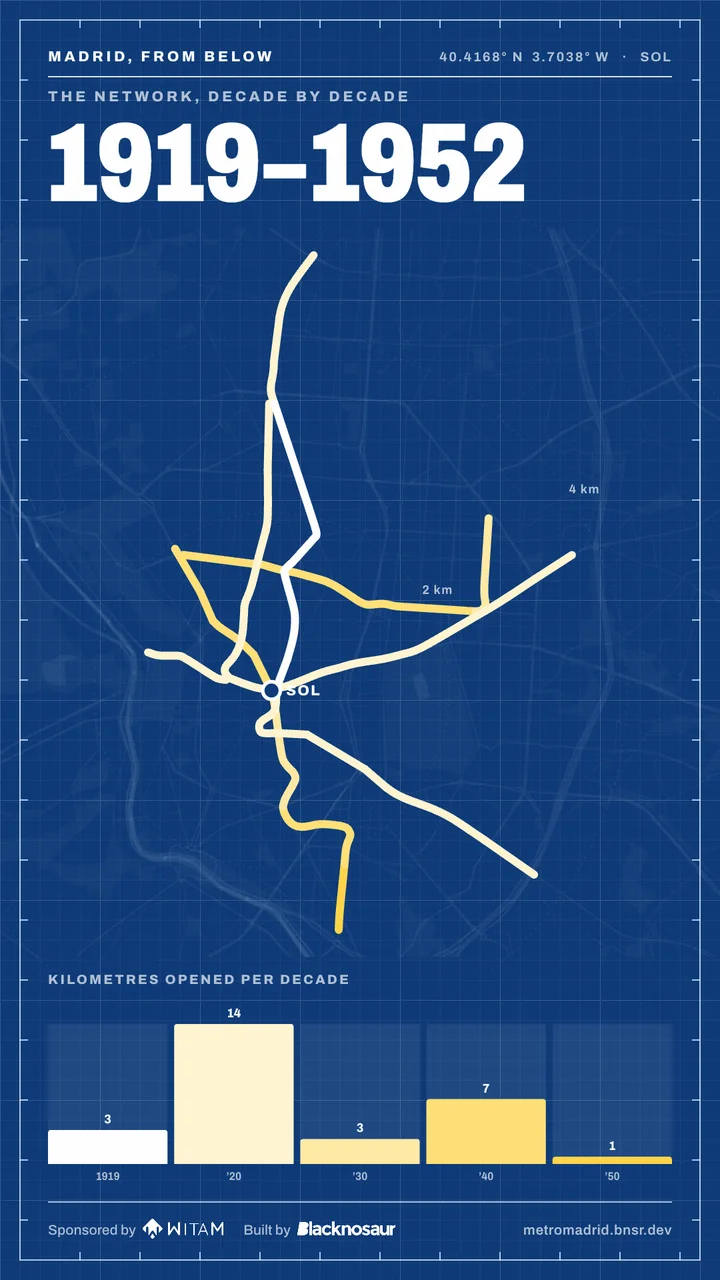 Blueprint
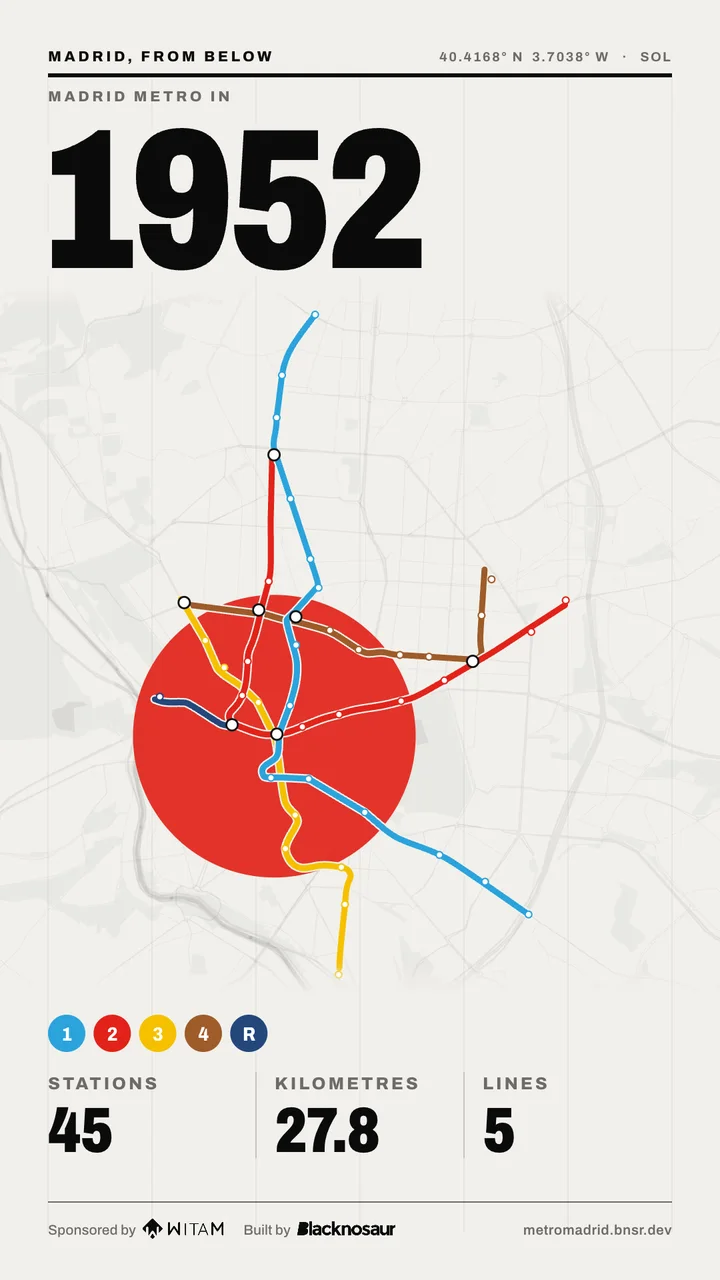 Swiss
A few of the sourced facts from the site, on a platform display. Each one links to where it came from.
Map data © OpenStreetMap contributors (ODbL) · Archive photos via Wikimedia Commons, public domain